

Why knowing better never changes anything
A renaissance of Lebenskunst

Hello and welcome to life as lab, a column about Lebenskunst experiments in messy times.
If you have ever tried to change your life, or the state of the world and discovered that knowing better changes nothing, you already understand why you need philosophy.
Let me explain.
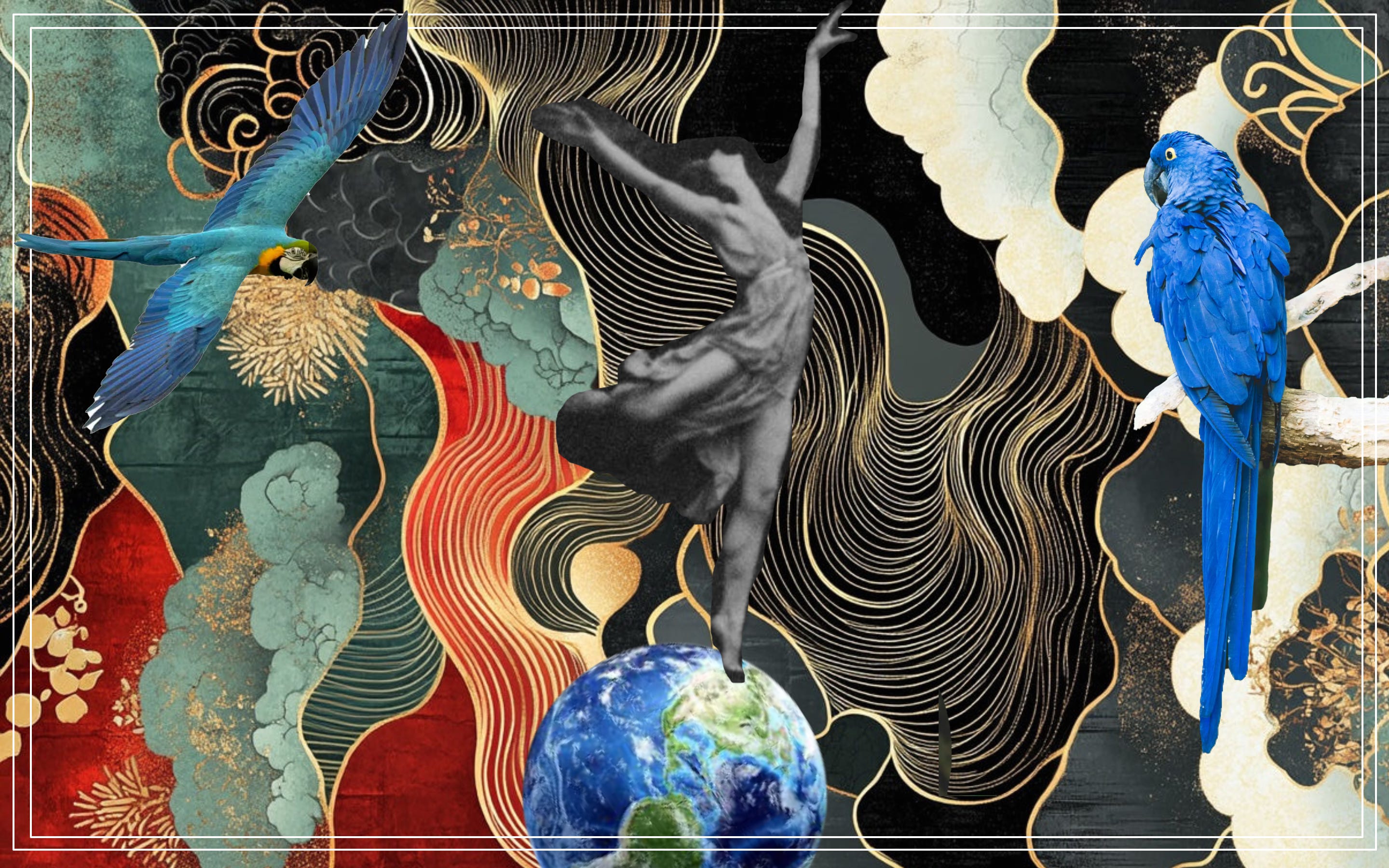
Go into a bookstore and look for the art of living. You will find shelves of it. How to be calm, how to be productive, how to be yourself. What you will likely not find is any of it, or hardly any, in the philosophy section. The philosopher Wilhelm Schmid said — in the 80th though — that there are countless books about the art of living, and no philosophy of it.
This column is my attempt to put the philosophy back as something I do with my life and report back on. So let me start with how philosophy lost it in the first place.
How philosophy turned away from Lebenskunst
This wasn’t always true. For the ancients, philosophy was the art of living — Lebenskunst, the Germans call it, and I keep the German word because I am German and the English “lifestyle” — which I actually still use in much of research — has been ruined. Lifestyle is mostly about branding and wearing sustainable clothing.
But back to the ancients.
For them, a philosophical school was not a curriculum. It was a way of life you trained for, daily, like an athlete. Then, somewhere along the way, philosophy filed Lebenskunst under hedonism — a mere art of refining pleasures, not serious enough, not rigorous enough — and dropped it. Philosophy became a discipline of texts about texts. It forgot what Lebenskunst had once been for — guiding the conduct of a life, giving it shape — and let go of the effort to build a philosophical form of life at all.
Quirky site note: I actually quit my very first studies because of a philosophy class in which we talked about the definition of a definition and became a mechanical engineer instead.
So in philosophy the question of how to lead a life was declared self-evident, beneath thought.
But questions don’t disappear only because philosophy abandons them. They just get answered by someone else.
What we have instead of philosophy
Two industries moved into the vacuum.
The first one Schmid calls the etiquette tradition — savoir-vivre. They are the handbooks of good manners and modern conventions, rules for moving frictionlessly through society. Its imperative is aesthetic rather than moral, but Schmid saw clearly that it is no less categorical: it scripts every gesture, stages every moment, and calls this living well. The second is self-help, which promises the opposite of convention — the discovery of our true self — and delivers the same thing: a norm to conform to, this time called authenticity, plus the fantasy of an easy, frictionless existence. I’d add to this psychology, which is also concerned with the formation of the self, draws a lot on philosophy, but is (mostly) deplete of the ethical dimension.
It was either about adaptation to society, or adaptation to a self.
Neither though can answer the question that is actually pressing on us. Because the question of Lebenskunst has returned as emergency.
The traditional ethics that once made the question unnecessary have either lost their binding force or hold no answer for the person now searching for a way to stand — a way to bear themselves through a run of situations that are genuinely new, genuinely strange. Meanwhile the conditions of existence have changed faster than any inherited wisdom can track: new technologies, endless options, a planet visibly destabilizing, the vertigo of seeing that planet from the outside, a life scattered across a thousand open tabs. And the techniques we’d need don’t lie ready at hand the way they might have in older cultures. Even where they exist, they can’t simply be applied — because what’s in question isn’t this habit or that one. It’s the whole mode of being human.
We are left with a hunger for the urgent questions.
Lebenskunst as collective practice
The philosopher Hans Krämer suggested that a renewed Lebenskunst would not be an individual project at all. It would be a Lebenskunst of the human species — an ecologically oriented ethics. How I live and how we live on this planet are not two questions, but one and the same.
When I talk about Lebenskunst, I don’t want to optimize my morning routine (though that’s part of it).
But at its core, I am after philosophy as something we do, with our body, in our kitchen, on our street — and I take the everyday seriously as the place where it happens.
What does it mean to live philosophically today? To bind thinking back to existence. To make reflection and experiment one gesture — a thinking-otherwise that is also a living-otherwise, reaching into every corner philosophy once thought beneath it.
Foucault said that if our lives are shaped by systems of discipline, the counter-move is not a manifesto. It is the everyday itself: no system can fully determine how we use what it gives us. Taking the available things and turning them to other purposes than the prescribed ones — that is an art. The everyday as the site of living otherwise.
Understood this way, the everyday is not convention.
It is the event of the Other, breaking in fresh each morning. To invent other ways of living, and to test them, is to produce another reality — the attention held on the moment where reality is still coming into being.
So I run experiments. One dress for a year. A month without motors. Eating what I can forage. These are not lifestyle content, and they are not virtue displays. They are philosophical arguments made with my life. The one-dress year was not only about minimalism. It was a question that confronted me with the reality of what happens to a self when sufficiency is taken to an extreme? I could not have thought my way to the answer.
That is one difference between the self-help shelf and Lebenskunst. Self-help gives us a conclusion and asks us to believe it. Lebenskunst, philosophy, is always experimental. An experiment gives us a question and asks us to live it.
Self-help wants to make our lives better. But it often does this by handing us a single rule, idea, or mindset — one meant to be applied exactly, indefinitely, no matter what reality actually looks like. It becomes a dogma. One order for every situation. Always and forever.
The impoverished versions of philosophy produce opinions. Philosophy as a way of life produces experience — and experience is the only thing that has ever changed anyone.
An experiment does obviously not save the planet. Wearing one dress did not lower atmospheric carbon in any measurable way. What it changed was my perception — what I could see, what felt necessary, what revealed itself. And perception is not a small thing. Every larger transformation begins as a shift in what someone is able to see. Seeing precedes acting, a culture that cannot see differently cannot act differently.
We already know this from our own life: nothing changes until something made us see differently. That is the mechanism Lebenskunst works on. Personal practice and planetary transformation connect through perception. Each life carries the pattern of the larger culture — the whole is present in the part.
Holograms all the way up and down.
This is also why Lebenskunst can’t be practiced alone, and why at IPeP we currently create a school for Lebenskunst (more coming soon) — a place to train the art of living the way we would train a muscle, with others, with resistance, with repetition. The ancients had their schools. I’d love to have one, too. Because I have no idea how to human well in these times and I want to learn.
Thank you for being here 🙏🖤.
If this resonated with you...
This space exists because of people like you who ask and wonder what it means to human well, for people who are curious, and who deeply care for the living world.
There is a real cost to creating this column. If you’d like to support it, becoming a Paying Member is one way to help sustain it. Every little bit truly makes a difference.
And if you’re a fellow writer on Substack who enjoys what I share, please consider recommending my publication. That’s one of the most powerful ways this conversation grows.
beautiful 🌀🙏
I love the definition of self-help: "a norm to conform to, this time called authenticity, plus the fantasy of an easy, frictionless existence." Unfortunately I have been a big fan of self-help books.
I guess the good part is that no single book really "stuck" with me. I read different books, tried them out in life, and kept what mattered to me, what worked, what resonated. I guess that is at the heart of the experimentation that you describe.
I am proud to say that my experiments are continuing, although now with fewer self-help books, and more community. So glad that your writing and Philosophy Gyms are part of that community for me!
Cannot wait to see what you have in store for us next with your school.