

Should We Write for Us or for Our Audience
A relational approach
Hello and welcome to wild:philosophy, a newsletter to explore entangled wisdom-ing. Wisdom not as a destination to be reached or an object to possess, but as an ongoing apprenticeship with the world.
For those new to this space, these explorations are grounded in what I call ekophilosophy. At its heart, it is relational , entangled, and includes perspectives beyond the purely human. It's informed by fields like process philosophy, multispecies approaches, biosemiotics, new materialism, 4(+2)E cognition, and Indigenous ways of knowing.
The eko in the name refers to embracing both: radical love of the self (ego) and radical love of the whole (eco).
This brings me to today’s topic: the act of writing itself. I don't just want to write about ekophilosophy; I want to live it. So, how can this very newsletter be a practice of that philosophy?
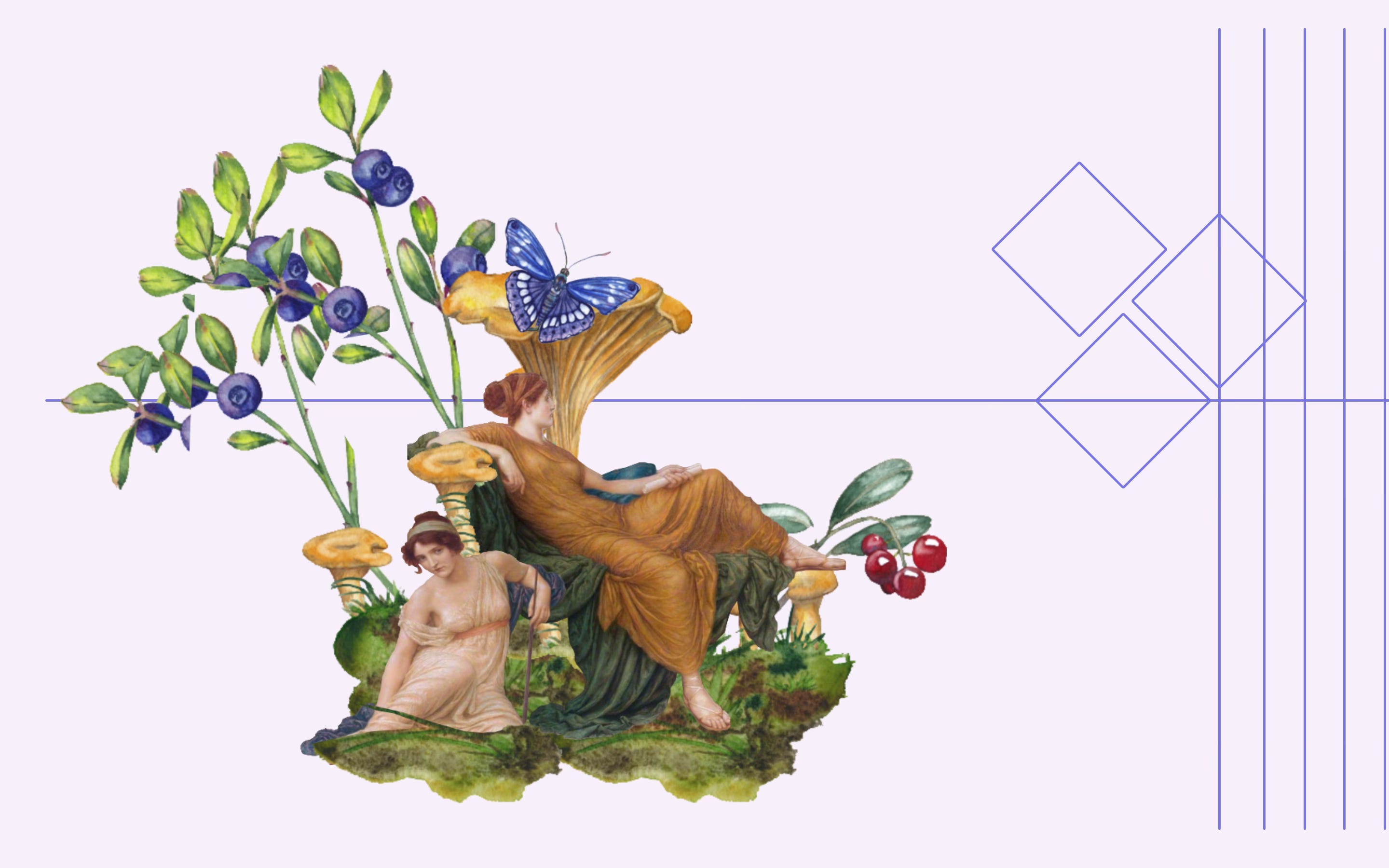
Should I write in the way that is authentically me, or should I write for you, my audience?
Rick Rubin says
“You are the only audience that matters”.
My ideas and interests are not particularly mainstream. And while I deeply enjoy the bittersweet process of writing—of wrestling with an idea until it finds its form—I also love the reward. The connection. The resonance that comes when these words land with another person.
Last week, I shared that I’ll be writing shorter “attentions” (less than 700 words). The main reason was feedback. Many of you kindly shared that my longer pieces can be dense, requiring a quiet corner and a cup of coffee—not really the circumstances most of us are in when we engage with online content.
And so the question resurfaced: should I write in a way that is authentically me or should I write for you, as my audience?
What I concluded this time is that making myself understood—and understanding for that matter—are not one-directional processes. They are multidirectional. For a long time, I imagined my authentic self was a fixed thing inside of me, a core being that I just had to express. The goal was to transmit that self onto the page.
But that’s not how it works, is it?
My authentic self is different when I am stepping into the role of a university professor than it is when I’m a friend listening over coffee, or a companion walking with Erna (my dog). Authenticity isn’t a static object we possess. It isn’t buried inside of us, waiting to be excavated. It emerges in the in-between-ness. In the relationship.
It lives in the question: Who am I when I am with you? And who are you when you are with me? Or as Nora Bateson puts it
“Who can you be when you are with me?”
I can’t truly know who you are on the other side of this screen—your context, your mood, your day. So all I can do is hold a question in my mind as I write: Where do we meet? Where, in this tangle of words, can my experience resonate with yours? Where can I attune to you?
Seen this way, the tension between writing for me and writing for you begins to dissolve.
It’s not an authentic me that I can impose on the world.
It’s an attempt of storytelling as practiced in oral cultures, in which,
“Stories and scripture were embodied and adapted to changing circumstances.” (Sophie Strand)
“My” authenticity is a relational process. I don’t want “my” writing to be a monologue, but a response. “My” voice is shaped by the act of speaking to you, even if I can only imagine you.
And perhaps the goal isn't to solve this tension, to finally figure it out once and for all.
Perhaps the real work is to simply be with it.
To enjoy the process of writing as this very tension. To find the creative energy in that pull between my inner world and our shared space. To understand that this challenge isn't an obstacle to my voice, but that this challenge is my voice, it’s where I am voice-ing. Not as something in me, but as something (even if imagined) between us.
I can’t find an endpoint. I can't build a finished product. This is a constant questioning. Never ending.
And this feels more honest.
It’s then no longer about finding a fixed voice to use, but rather about letting the voice emerge from the practice of showing up, of listening, of trying to bridge the gap between our mind.
The challenge is where do we, you and I, meet in these words?
That, I’m learning, is the most authentic place to write from. Authenticity not as something inside of me, but between us.
Because as Rick Rubin also says
“Art creates a profound connection between the artist and the audience”. Through that connection, both can heal.”
Thanks for reading wild:philosophy 🙏.
I genuinely appreciate your time and attention 🖤.
If you find this valuable, I'd be grateful if you recommended it to someone who might appreciate it too – it’s a simple way to support my work and help it find new readers. Also, please reach out anytime with ideas, comments, or thoughts. I'd love to hear from you. - Jes
Write as if you are offering your reader a gift—something you’ve wrapped with care, attention, and love. But make sure it is a gift you would treasure yourself.
Thank you for articulating this tension and practice so thoughtfully.