

Escaping Flatness
Hello and welcome to life as lab — something like a philosophical-lifestyle-column, experimenting how to human well in a more-than-human world.
David Bowie once said: “Trust nothing but your own experience.” Simone Weil believed the deepest truths are experimental: they cannot be verified by argument alone but must be lived into, bodily, before they yield their meaning.
Philosophy as a way of life — which is what I talk about here, what I try to practice, what I fail at and try again — has come to mean something very specific to me. A philosophical life, for me, is living life as a lab.
I have written about boredom before and how the opposite of sustainability is boredom. I argued that it comes from a thinning of reality — from the way acceleration compresses our temporal experience until nothing quite lands or fully registers, and the world starts to feel like a blurred sequence of surfaces. The depth of encounter that makes life feel real requires a kind of duration that speed structurally forecloses.
But boredom was only one layer. Today’s essay is about another layer.
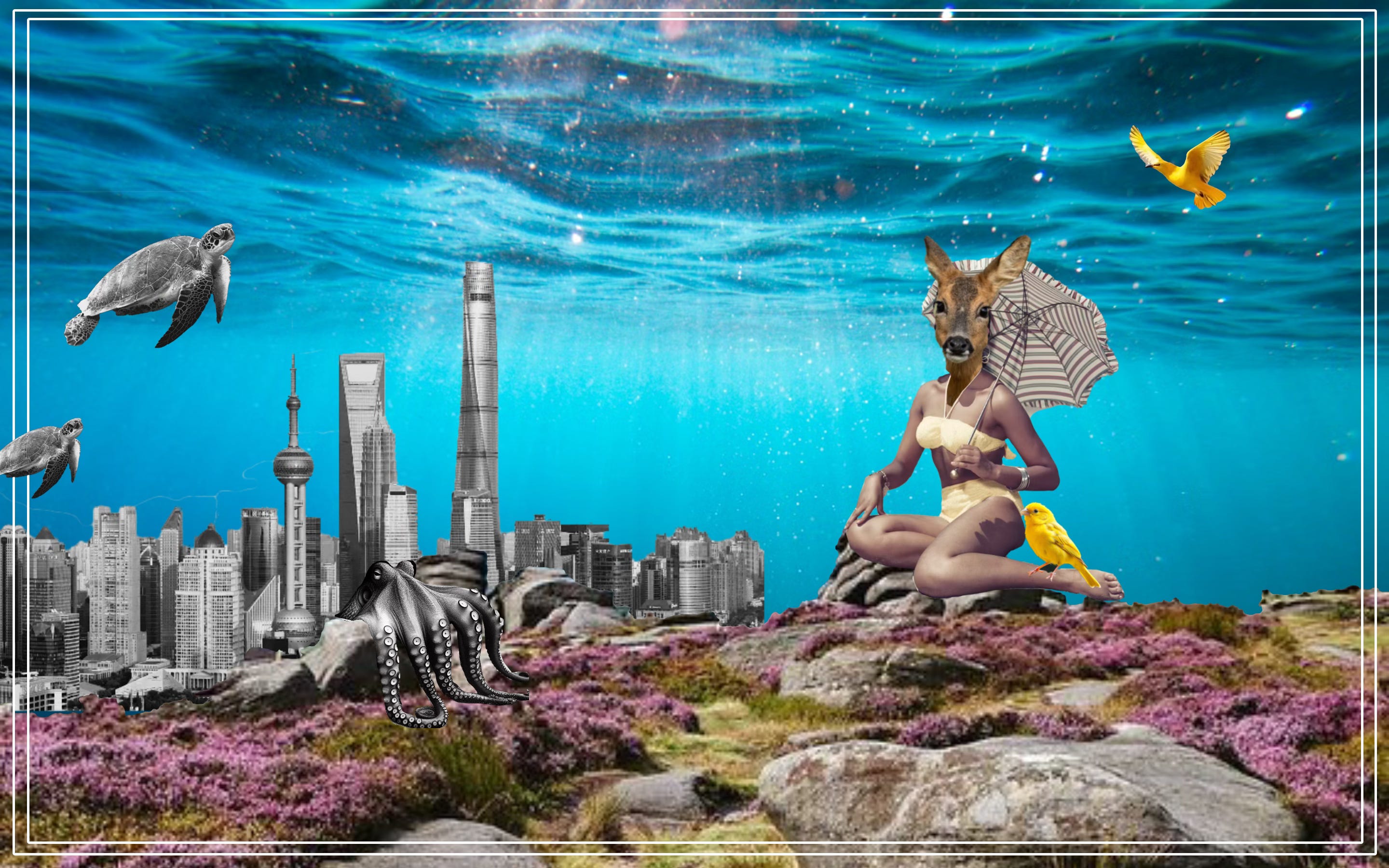
Another layer is a loss of direction that I think many of us experience.
We have burned through the directions our culture offers.
I find most of these directions — money, career, status, optimization — not particularly interesting. I’ve written about this before. The conventional map doesn’t match my terrain. It never really did.
So the past couple of years, I dedicated my life to something else: truth.
Wanting to know. Wanting to learn. Wanting to understand what this world actually is. I followed that thread through philosophy, through science, through relational ontologies and process thought and ways of knowing that most of academia considers fringe. And I still find most of it absolutely fascinating.
But even that — even the pursuit of truth — has, to some degree, lost its pull.
My story reminds me of Tolstoy.
Tolstoy’s loss of meaning
In A Confession, Tolstoy describes a crisis that arrived at the height of his success. He had everything — fame, family, wealth, literary genius recognized by the world — and none of it answered the question that had begun to consume him: what is this all for? He would imagine achieving something, and then ask: and then what? And there was never a satisfying answer. Not from philosophy. Not from science. Not from the other intellectuals he admired, who were, he realized, in exactly the same pickle, just better at not eating it.
What struck him was that the people who did seem to know how to live, like peasants and workers, didn’t know what life was about in any articulable way. They didn’t have a theory of meaning. They simply participated. Their lives had a quality of directness, of engagement with what was real, that no amount of intellectual brilliance could replicate.
Tolstoy concluded that life is not about knowing its meaning but about being in relation to it. That meaning arrives as participation.
I think I’m arriving somewhere similar. Though while Tolstoy took a religious turn — that’s not my path.
Participation as religion
I find the what of what I am doing to becoming less important. What I know. What I’ve studied. What I can explain, produce, publish. The content of my expertise. I notice that I can get curious and interested in almost anything. And all of these things open up whole new worlds.
I have therefore become more interested in what Goethe might call the Urphänomen, or even more: urphänomen-ing.
In other words: I have become much more interested in the how.
This shift I think becomes impossible to ignore with AI. Much of the what I spent years building — reading, synthesizing, connecting of literatures across disciplines, translating of complex ideas into understandable ones — can now be done, often faster and sometimes better, by a machine. The what of what I’ve been doing has, in a meaningful sense, been taken over.
But the how. The how has not been taken over. The how cannot be taken over.
How I pay attention.
How I let a question change me.
How I sit with not knowing and resist the impulse to resolve it prematurely.
How I meet another being — human or more-than-human — and stay in the encounter long enough for something to move between us.
How I hold my frameworks lightly.
How I show up to the day.
How I participate in life.
That is what interests me.
And this, I think, is what life as a lab has become for me. It’s not a methodology for producing more insights or a self-improvement project. But a practice of how. A practice of participation that is deeply relational, experimental, humble, and — when it works — genuinely awe-giving.
Because it presumes exploration, not mastery.
Escaping mastery
Our WEIRD world — Western, educated, industrialized, rich, democratic — has come to think of the good life as mastery. Master your field. Master your emotions. Master your body, your finances, your time, your morning routine. The entire infrastructure of modern aspiration is built around the idea that to live well is to achieve control over increasingly large domains.
But exploration — lab-ing — is a process that we do when we don’t know what we’re looking for. When the point is not to arrive but to stay in contact. When each experiment opens into the next question rather than closing into a conclusion. When we are willing to be altered by what we find.
Exploration is participation. It is constantly unlearning and relearning. It is treating our own certainties as provisional, our own categories as porous, our own life as the site where the real questions get tested in the texture of messy, everyday life.
Mastery: I have understood this.
Exploration: I am in the middle of this. I don’t know where it goes. I am going anyway.
Bowie also said:
“If you feel safe in the area you’re working in, you’re not working in the right area. Always go a little further into the water than you feel you’re capable of being in. Go a little bit out of your depth. And when you don’t feel that your feet are quite touching the bottom, you’re just about in the right place to do something exciting.”
That’s the lab.
I don’t have a neat conclusion for this. Which feels appropriate, given that the whole point is to resist conclusions.
What I have is a shift. Away from the what, toward the how.
Life as a lab is the practice of that shift.
And the experiment is always the same: Can I participate more fully in what is real? — instead of what is useful or productive, measured, optimized, or uploaded.
Thank you for being here 🙏🖤.
If this resonated with you...
This space exists because of people like you who ask and wonder what it means to human well, for people who are curious, and who deeply care for the living world.
There is a real cost to creating this column. If you’d like to support it, becoming a Paying Member is one way to help sustain it. Every little bit truly makes a difference.
And if you’re a fellow writer on Substack who enjoys what I share, please consider recommending my publication. That’s one of the most powerful ways this conversation grows.
Ah, the fruit is because of time, not speed.
I may sit in groups of discussion and feel only shallow and safety of the known.
I feel you have touched on time itself, to begin the unlearned unknowns.
We have ignored so much in naming everything and everyone, it remains obscured in nouns and rigidity for mechanical lines of code, the words are dead, frozen, and need release from the glue that binds them to the flat page.
By design, cliche and complexity, we basically have little content.
As with tasting the wine, it will cliche of blackberry, pollen and a hint of gasoline.
The gasoline, plastic, dry sand, diesel and journey through the landfill, is not on the lips of the confessionary, weaving their placebo of art for our pleasure in romantic trespass of nature and the sale of it.
Interestingly the honey bee is not the partner of exceptional pride, but its cousin the solitary ground bee is, the atomized dictionary of monoculture has no pause button.
People ask me of a flower made to embellish their homes, and myself an antique of sorts, will have an aneurism explaining rooms and towers of rooms, behind doors and in draws is only 30% of the pressed choices in millions, each flower receiving in the scroll, an allowance of microseconds to shake each hand and say no, not you!.
It’s as if IKEA stole the world by Disney and Disney stole the world for its plastic familiar face, the only face Ai will recognize as the standard expression in dullness and grey.
Of course who doesn’t know we live in a freak show attempting to escape the soil for a brief moment while entirely forgetting the cultural relationship for the getting ahead, mind and set.
The simple task is to remove the word *philosophy* and tell us a story underneath it and unauthored, un-referenced, un-adulterated and for the child to have a future without the bigness of explicit ambiguity, as if all the stars will fit in one purse.
What I seem to like best in writing is groping around for the truth even while knowing certainty will never come. And what I like best in non-writing is walking outdoors or doing outdoor tasks that require sustained bodily effort.